
Books like A Clockwork Orange
What should you read after Anthony Burgess’s novel? It depends on what you loved most about it.
- Anthony Burgess
- 1962
- Dystopian fiction
What did you love about it?
Choosing one reorders everything below.
Best books to read after A Clockwork Orange
Ranked overall. Pick what you loved above to re-rank them.
 Best overall match
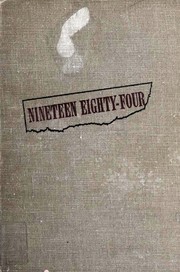
Nineteen Eighty-Four
Orwell's state doesn't rehabilitate Alex, it rewrites him — and the last act asks the same question Burgess does about whether a coerced conscience is one at all.
- Free will versus conditioning
- The state as the worse evil
- Nadsat, the invented slang
- Duplicate of the 1984 record
 Great match
Brave New World
Aldous Huxley
Conditioning as a public good, applied at birth rather than in prison. Huxley makes the argument Burgess dramatises, and makes it funnier.
Recommended by readers in 3 of 6 threads we reviewed
- Free will versus conditioning
- The state as the worse evil
- No violence, no gang life
 Great match
Fahrenheit 451
Ray Bradbury
Another author who invented a whole verbal style for a society that stopped thinking. Bradbury's is prettier; the anger underneath is the same.
- Free will versus conditioning
- Nadsat, the invented slang
- Lyrical rather than brutal
 Great match
The Handmaid’s Tale
Margaret Atwood
A state that reforms people for their own good and calls the result freedom. Atwood's version has none of Alex's swagger and twice the dread.
- The state as the worse evil
- Free will versus conditioning
- Sexual violence throughout
 Great match
Lord of the Flies
William Golding
Boys with nobody watching, discovering what they are capable of within a fortnight. Burgess's droogs, minus the state and minus the irony.
- Youth gangs and boredom
- A charming monster narrator
- No dystopian apparatus
 Worth a look — with a warning
A Brave New World Revisited
Aldous Huxley
Huxley's own non-fiction follow-up, checking his predictions against 1958. Useful if you want the argument straight, dull if you wanted a novel.
- Free will versus conditioning
- The state as the worse evil
- Non-fiction, no story
 Great match
We
Yevgeny Zamyatin
The original novel about a state that surgically removes the imagination from its citizens, narrated by a man who is losing his. Jagged and strange.
- Free will versus conditioning
- The state as the worse evil
- Difficult modernist prose
 Great match
The Picture of Dorian Gray
Oscar Wilde
A beautiful young man who commits atrocities without consequence and remains charming throughout. The aesthetics-and-evil pairing Burgess is playing with.
- A charming monster narrator
- Violence set to classical music
- Victorian, mannered prose
 Great match
Fight Club
Chuck Palahniuk
A narrator who makes his own violence sound like a joke you're in on, in prose built for velocity. The closest modern descendant of Alex's voice.
- A charming monster narrator
- Youth gangs and boredom
- Violence set to classical music
- Nihilism without Burgess's ethics
 Worth a look — with a warning
American Psycho
Bret Easton Ellis
A polished, funny, unreliable narrator describing atrocities between restaurant reservations. The most extreme thing here, and it means to be unbearable.
- A charming monster narrator
- Violence set to classical music
- Extreme sexual violence
 Worth a look — with a warning
Clockwork Angels
Kevin J. Anderson
Matched on the word 'clockwork' and little else — this is a steampunk novelisation of a Rush concept album. Fine on its own terms, unrelated to Burgess.
- Nadsat, the invented slang
- Youth gangs and boredom
- Shares only a title word
 Great match
Neuromancer
William Gibson
Gibson invented a vocabulary and made readers learn it mid-sentence, exactly as Burgess did. Low-life criminals, high-tech state, dense slang.
- Nadsat, the invented slang
- Youth gangs and boredom
- Cyberpunk, and quite technical
 Best for the free-will argument
One Flew Over the Cuckoo's Nest
Ken Kesey
An institution that corrects difficult men into docile ones, and what it costs the one who resists. The Ludovico Technique with a different name.
- Free will versus conditioning
- The state as the worse evil
- A charming monster narrator
- Racist and misogynist passages
What should you read after A Clockwork Orange?
A Clockwork Orange by Anthony Burgess works on several levels at once, and which book you should read next depends on which of those levels got you. For most readers the closest match is Nineteen Eighty-Four by — orwell's state doesn't rehabilitate Alex, it rewrites him — and the last act asks the same question Burgess does about whether a coerced conscience is one at all.
If what stayed with you was free will versus conditioning, read Brave New World by Aldous Huxley instead: conditioning as a public good, applied at birth rather than in prison. Huxley makes the argument Burgess dramatises, and makes it funnier. Fahrenheit 451 by Ray Bradbury is the other strong option — another author who invented a whole verbal style for a society that stopped thinking. Bradbury's is prettier; the anger underneath is the same.
What readers recommend
Across 6 Reddit threads asking what to read after A Clockwork Orange, the books readers name most often are Brave New World (3 of 6 threads). Every count is a distinct thread, not repeat comments.
Sources: r/suggestmeabook (2025) · r/booksuggestions (2020) · r/suggestmeabook (2023)
Common questions
- What should you read after A Clockwork Orange?
- Nineteen Eighty-Four by , Brave New World by Aldous Huxley, Fahrenheit 451 by Ray Bradbury are the closest matches. Which fits best depends on what you loved about A Clockwork Orange: nadsat, the invented slang, free will versus conditioning, a charming monster narrator, violence set to classical music.
- What is the best book like A Clockwork Orange?
- Nineteen Eighty-Four by is the strongest overall match. Orwell's state doesn't rehabilitate Alex, it rewrites him — and the last act asks the same question Burgess does about whether a coerced conscience is one at all.
- What are books similar to A Clockwork Orange by Anthony Burgess?
- Nineteen Eighty-Four by , Brave New World by Aldous Huxley, Fahrenheit 451 by Ray Bradbury, The Handmaid’s Tale by Margaret Atwood, Lord of the Flies by William Golding, A Brave New World Revisited by Aldous Huxley, We by Yevgeny Zamyatin, The Picture of Dorian Gray by Oscar Wilde, Fight Club by Chuck Palahniuk, American Psycho by Bret Easton Ellis, Clockwork Angels by Kevin J. Anderson, Neuromancer by William Gibson, One Flew Over the Cuckoo's Nest by Ken Kesey. Each one matches a different part of A Clockwork Orange rather than just its genre.
- Is Nineteen Eighty-Four worth reading after A Clockwork Orange?
- Yes — readers who loved A Clockwork Orange tend to land well with it: the state remaking a mind; language as an instrument; a famous, brutal final act. One thing to know going in: duplicate of the 1984 record.
Loved something else?
Start from any book and we’ll build the list around your reasons.
Find my next book →NextBook is a participant in the Amazon Associates Program. We earn from qualifying purchases, at no extra cost to you. It doesn’t affect which books we recommend or how we rank them.
More “what to read next” lists
- Books like 1984
- Books like 2312
- Books like A Darker Shade of Magic
- Books like A Gentleman in Moscow
- Books like A Little Life
- Books like A Man Called Ove
- Books like A Memory Called Empire
- Books like A Wrinkle in Time
- Books like All Systems Red
- Books like All the Bright Places
- Books like Altered Carbon
- Books like An Ember in the Ashes