
Books like Hyperion
What should you read after Dan Simmons’s novel? It depends on what you loved most about it.
- Dan Simmons
- 1989
- Space opera
What did you love about it?
Choosing one reorders everything below.
Best books to read after Hyperion
Ranked overall. Pick what you loved above to re-rank them.
 Best overall match
Dune
Frank Herbert
The other great baroque empire novel: religion, ecology and dynastic scheming on one desert planet, and the same conviction that science fiction can carry myth.
- Poetry taken seriously
- An empire held together by portals
- A monster nobody understands
- One continuous narrative
 Great match
Foundation
Isaac Asimov
Asimov also builds a novel out of separate episodes across a falling empire — the structural ancestor, though the prose is a plank next to Simmons.
- Pilgrims telling their tales
- An empire held together by portals
- It ends without ending
- Characters are functional
 Best for the nested tales
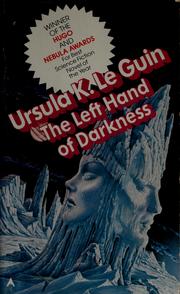
The Left Hand of Darkness
Ursula K. Le Guin
Le Guin builds her novel out of reports, myths and folk tales as well as scenes — the same trick of letting a world speak in several voices at once.
- Pilgrims telling their tales
- A different genre every chapter
- Poetry taken seriously
- Quiet; there is no monster
 Great match
Neuromancer
William Gibson
Gibson's AIs want things and conspire to get them, five years ahead of the TechnoCore. Read it for the machine politics; the plot is almost beside the point.
- AIs with their own plans
- An empire held together by portals
- A different genre every chapter
- Street-level, not galactic
 Worth a look — with a warning
Snow Crash
Neal Stephenson
Stephenson also crams linguistics, religion and mythology into a thriller and dares you to keep up. Much funnier, and it collapses in the final hundred pages.
- AIs with their own plans
- A different genre every chapter
- Poetry taken seriously
- Satirical, deliberately silly
 Best for the ideas
The Dispossessed
Ursula K. Le Guin
If the Consul's tale and its politics were the part that stayed with you, Le Guin's two-worlds novel is the most serious argument the genre has produced.
- An empire held together by portals
- Poetry taken seriously
- Pilgrims telling their tales
- No action to speak of
 Worth a look — with a warning
Ender's Game
Orson Scott Card
The most readable book on this list and the least like Hyperion in ambition: one boy, one problem, and a final turn that made the genre's reputation.
- A monster nobody understands
- AIs with their own plans
- An empire held together by portals
- Simple prose and structure
 Best for the time distortion
The Forever War
Joe Haldeman
Haldeman's soldier keeps coming home to a century he does not recognise. The cleanest version of the grief Simmons pours into the Scholar's tale.
- Time running backwards
- A monster nobody understands
- An empire held together by portals
- One narrator, straight chronology
 Great match
Consider Phlebas
Iain M. Banks
Banks writes set pieces with the same relish, and the same willingness to be grotesque about them. Start here or with Player of Games, depending on your patience.
- AIs with their own plans
- An empire held together by portals
- A different genre every chapter
- Weakest of the Culture books
 Great match
Oryx and Crake
Margaret Atwood
Atwood also tells her disaster backwards and in fragments, through one man who was there. Literary science fiction that shares Simmons's taste for allusion.
- Time running backwards
- Poetry taken seriously
- Pilgrims telling their tales
- Near-future, no space
 Worth a look — with a warning
Red Mars
Kim Stanley Robinson
Robinson rotates viewpoints across a colony the way Simmons rotates pilgrims, but he is interested in soil chemistry where Simmons is interested in Keats.
- Pilgrims telling their tales
- An empire held together by portals
- Poetry taken seriously
- Heavy technical detail
 Best for the unknowable
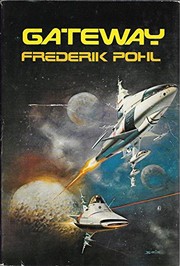
Gateway
Frederik Pohl
Alien machinery nobody can read, used anyway because the payoff is worth dying for. Pohl frames the whole thing around a man in therapy, guilty about what happened.
- A monster nobody understands
- Time running backwards
- Pilgrims telling their tales
- 1977, and the psychology dates
 Best for the literary ambition
The Book of the New Sun
Gene Wolfe
The one book here that out-reaches Hyperion: dying-earth science fiction narrated by a torturer who claims perfect recall and lies to you constantly.
- Poetry taken seriously
- Pilgrims telling their tales
- A different genre every chapter
- Genuinely difficult going
What should you read after Hyperion?
Hyperion by Dan Simmons works on several levels at once, and which book you should read next depends on which of those levels got you. For most readers the closest match is Dune by Frank Herbert — the other great baroque empire novel: religion, ecology and dynastic scheming on one desert planet, and the same conviction that science fiction can carry myth.
If what stayed with you was pilgrims telling their tales, read Foundation by Isaac Asimov instead: asimov also builds a novel out of separate episodes across a falling empire — the structural ancestor, though the prose is a plank next to Simmons. The Left Hand of Darkness by Ursula K. Le Guin is the other strong option — le Guin builds her novel out of reports, myths and folk tales as well as scenes — the same trick of letting a world speak in several voices at once.
Common questions
- What should you read after Hyperion?
- Dune by Frank Herbert, Foundation by Isaac Asimov, The Left Hand of Darkness by Ursula K. Le Guin are the closest matches. Which fits best depends on what you loved about Hyperion: pilgrims telling their tales, a monster nobody understands, time running backwards, a different genre every chapter.
- What is the best book like Hyperion?
- Dune by Frank Herbert is the strongest overall match. The other great baroque empire novel: religion, ecology and dynastic scheming on one desert planet, and the same conviction that science fiction can carry myth.
- What are books similar to Hyperion by Dan Simmons?
- Dune by Frank Herbert, Foundation by Isaac Asimov, The Left Hand of Darkness by Ursula K. Le Guin, Neuromancer by William Gibson, Snow Crash by Neal Stephenson, The Dispossessed by Ursula K. Le Guin, Ender's Game by Orson Scott Card, The Forever War by Joe Haldeman, Consider Phlebas by Iain M. Banks, Oryx and Crake by Margaret Atwood, Red Mars by Kim Stanley Robinson, Gateway by Frederik Pohl, The Book of the New Sun by Gene Wolfe. Each one matches a different part of Hyperion rather than just its genre.
- Is Dune worth reading after Hyperion?
- Yes — readers who loved Hyperion tend to land well with it: myth and religion at scale; a planet drawn in depth; prophecy and predestination. One thing to know going in: one continuous narrative.
Loved something else?
Start from any book and we’ll build the list around your reasons.
Find my next book →NextBook is a participant in the Amazon Associates Program. We earn from qualifying purchases, at no extra cost to you. It doesn’t affect which books we recommend or how we rank them.
More “what to read next” lists
- Books like 1984
- Books like 2312
- Books like A Clockwork Orange
- Books like A Darker Shade of Magic
- Books like A Gentleman in Moscow
- Books like A Little Life
- Books like A Man Called Ove
- Books like A Memory Called Empire
- Books like A Wrinkle in Time
- Books like All Systems Red
- Books like All the Bright Places
- Books like Altered Carbon