
Books like Neuromancer
What should you read after William Gibson’s novel? It depends on what you loved most about it.
- William Gibson
- 1984
- Cyberpunk
What did you love about it?
Choosing one reorders everything below.
Best books to read after Neuromancer
Ranked overall. Pick what you loved above to re-rank them.
 Best overall match
Hyperion
Dan Simmons
The other great argument that science fiction can be written as literature. Simmons switches voice every section the way Gibson switches register, and both trust you to keep up.
- Prose that reads like a razor
- A plot you have to keep up with
- An AI trying to get free
- Ends mid-story; you need the sequel
 Great match
Dune
Frank Herbert
Herbert also drops you into a working future without a glossary and lets the vocabulary teach itself. Different planet, same refusal to explain anything twice.
- A plot you have to keep up with
- Corporations instead of countries
- 688 pages and a slow first half
 Best for the noir plot
Leviathan Wakes
James S.A. Corey
A missing-person case that turns into something much larger, run by corporations who consider people inventory. Gibson's detective bones in a bigger solar system.
- Corporations instead of countries
- A plot you have to keep up with
- A heist crew of specialists
- Plain prose by design
 Worth a look — with a warning
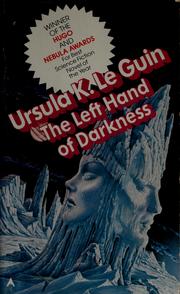
The Left Hand of Darkness
Ursula K. Le Guin
Le Guin is the other 1970s writer who made the field respectable, and she does what Gibson does — build a culture so completely that the plot becomes secondary.
- Prose that reads like a razor
- A future that feels secondhand
- Slow and cold on purpose
 Great match
Ender's Game
Orson Scott Card
The other great novel about living inside a simulation you are being used by, and only working out afterwards what the machine wanted from you.
- Jacking into cyberspace
- An AI trying to get free
- YA-adjacent, much simpler prose
 Best for the AI point of view
Ancillary Justice
Ann Leckie
Where Gibson keeps Wintermute offstage and unknowable, Leckie hands you the narration and makes an artificial mind the most human thing in the book.
- An AI trying to get free
- Corporations instead of countries
- Deliberate, talky pacing
 Worth a look — with a warning
Foundation
Isaac Asimov
Here because the co-occurrence data insists, and because it is the other book about systems outliving the people inside them. Stylistically it is Gibson's opposite.
- Corporations instead of countries
- A plot you have to keep up with
- Flat 1950s prose, no atmosphere
 Best for the cyberspace itself
Snow Crash
Neal Stephenson
The direct answer record: Stephenson took Gibson's cyberspace, made it funny, gave it avatars and pizza franchises, and refused to be solemn about any of it.
- Jacking into cyberspace
- Corporations instead of countries
- Mirrored lenses and street tech
- Comic where Gibson is cool
 Great match
The Forever War
Joe Haldeman
A soldier whose body is rebuilt by employers who own it, returning each time to a world that has moved on without him. The same alienation, different mechanism.
- Mirrored lenses and street tech
- A future that feels secondhand
- Military SF, not street crime
 Best for the hard-boiled voice
Altered Carbon
Richard K. Morgan
Gibson's grandchild, and unembarrassed about it: same rain, same implants, same contempt for the immortal rich, with an actual detective plot bolted on.
- Mirrored lenses and street tech
- Prose that reads like a razor
- Jacking into cyberspace
- Much more violence and sex
 Great match
Revelation Space
Alastair Reynolds
Gothic hardware, ships that are more infection than machine, and an information plot that only assembles in the last hundred pages. Gibson's murk at interstellar scale.
- A plot you have to keep up with
- A future that feels secondhand
- Long and demanding
 Worth a look — with a warning
Red Mars
Kim Stanley Robinson
Included because both books take the near-term future seriously as an economic argument. Robinson simply writes the boardroom out loud instead of implying it.
- Corporations instead of countries
- A future that feels secondhand
- Long stretches of technical detail
 Great match
The Three-Body Problem
Cixin Liu
A virtual world that turns out to be a recruitment tool for something inhuman — the closest anyone has come to rebuilding Gibson's cyberspace as a trap.
- Jacking into cyberspace
- An AI trying to get free
- Characters are thin by design
What should you read after Neuromancer?
Neuromancer by William Gibson works on several levels at once, and which book you should read next depends on which of those levels got you. For most readers the closest match is Hyperion by Dan Simmons — the other great argument that science fiction can be written as literature. Simmons switches voice every section the way Gibson switches register, and both trust you to keep up.
If what stayed with you was a plot you have to keep up with, read Dune by Frank Herbert instead: herbert also drops you into a working future without a glossary and lets the vocabulary teach itself. Different planet, same refusal to explain anything twice. Leviathan Wakes by James S.A. Corey is the other strong option — a missing-person case that turns into something much larger, run by corporations who consider people inventory. Gibson's detective bones in a bigger solar system.
Common questions
- What should you read after Neuromancer?
- Hyperion by Dan Simmons, Dune by Frank Herbert, Leviathan Wakes by James S.A. Corey are the closest matches. Which fits best depends on what you loved about Neuromancer: jacking into cyberspace, prose that reads like a razor, an ai trying to get free, a heist crew of specialists.
- What is the best book like Neuromancer?
- Hyperion by Dan Simmons is the strongest overall match. The other great argument that science fiction can be written as literature. Simmons switches voice every section the way Gibson switches register, and both trust you to keep up.
- What are books similar to Neuromancer by William Gibson?
- Hyperion by Dan Simmons, Dune by Frank Herbert, Leviathan Wakes by James S.A. Corey, The Left Hand of Darkness by Ursula K. Le Guin, Ender's Game by Orson Scott Card, Ancillary Justice by Ann Leckie, Foundation by Isaac Asimov, Snow Crash by Neal Stephenson, The Forever War by Joe Haldeman, Altered Carbon by Richard K. Morgan, Revelation Space by Alastair Reynolds, Red Mars by Kim Stanley Robinson, The Three-Body Problem by Cixin Liu. Each one matches a different part of Neuromancer rather than just its genre.
- Is Hyperion worth reading after Neuromancer?
- Yes — readers who loved Neuromancer tend to land well with it: style treated as the main event; a reader left to assemble it; an intelligence with its own agenda. One thing to know going in: ends mid-story; you need the sequel.
Loved something else?
Start from any book and we’ll build the list around your reasons.
Find my next book →NextBook is a participant in the Amazon Associates Program. We earn from qualifying purchases, at no extra cost to you. It doesn’t affect which books we recommend or how we rank them.
More “what to read next” lists
- Books like 1984
- Books like 2312
- Books like A Clockwork Orange
- Books like A Darker Shade of Magic
- Books like A Gentleman in Moscow
- Books like A Little Life
- Books like A Man Called Ove
- Books like A Memory Called Empire
- Books like A Wrinkle in Time
- Books like All Systems Red
- Books like All the Bright Places
- Books like Altered Carbon