
Books like Foundation
What should you read after Isaac Asimov’s novel? It depends on what you loved most about it.
- Isaac Asimov
- 1951
- Classic science fiction
What did you love about it?
Choosing one reorders everything below.
Best books to read after Foundation
Ranked overall. Pick what you loved above to re-rank them.
 Best overall match
Dune
Frank Herbert
The other pillar: an empire in decline, a prophecy engineered on purpose, and centuries of consequence. Herbert supplies the desert grain that Asimov's overview deliberately skips.
- An empire taking centuries to fall
- Religion invented as policy
- The galaxy seen from above
- Immersive rather than schematic
 Great match
Ender's Game
Orson Scott Card
If the appeal was a clever mind out-thinking a crisis in a room, Card gives you the purest form of it: every problem solved by reasoning under pressure.
- Problems solved by talking
- Ideas doing the work, not action
- Traders and bureaucrats as heroes
- Military school, not politics
 Best for the scale
Hyperion
Dan Simmons
A galaxy-spanning civilisation seen through seven separate lives, each told in a different voice. Where Asimov zooms out, Simmons stacks close-ups until the same picture appears.
- The galaxy seen from above
- A new generation every chapter
- Ideas doing the work, not action
- The story ends unresolved
 Great match
1984
George Orwell
Asimov asks whether history can be steered. Orwell asks who gets to write it down afterwards. Read as a pair they cover both directions of control.
- Ideas doing the work, not action
- An empire taking centuries to fall
- A science that predicts history
- No galactic scope
 Great match
Brave New World
Aldous Huxley
Another society engineered from above by planners convinced they know best, and another novel far more interested in the argument than in the chase.
- Ideas doing the work, not action
- Religion invented as policy
- A science that predicts history
- No space, no empire
 Worth a look — with a warning
The Forever War
Joe Haldeman
Relativity turns a soldier into an accidental time traveller, so he watches human civilisation mutate past him. Asimov's centuries, felt from inside one life.
- A new generation every chapter
- An empire taking centuries to fall
- The galaxy seen from above
- Combat-heavy from start to finish
 Best for the ideas
The Dispossessed
Ursula K. Le Guin
Le Guin builds two societies and lets a physicist walk between them. It is the thinking reader's version of what Asimov only gestures at with psychohistory.
- Ideas doing the work, not action
- A science that predicts history
- Problems solved by talking
- Almost no plot momentum
 Worth a look — with a warning
Snow Crash
Neal Stephenson
Stephenson shares Asimov's fondness for an explanatory lecture, but he is a satirist: religion as software, franchise nation-states, all of it delivered at a sprint.
- Religion invented as policy
- Ideas doing the work, not action
- Traders and bureaucrats as heroes
- Deliberately silly tone
 Great match
Foundation and Empire
Isaac Asimov
The obvious next step, and the one where Asimov breaks his own machine with a mutant the equations never predicted. Read it before anyone spoils the Mule for you.
- A science that predicts history
- An empire taking centuries to fall
- A new generation every chapter
- Assumes you read book one
 Great match
Red Mars
Kim Stanley Robinson
A century of colonising Mars, run as an argument between engineers, politicians and ideologues. Asimov's long view with the committee meetings put back in.
- A new generation every chapter
- An empire taking centuries to fall
- Traders and bureaucrats as heroes
- Long geology passages
 Great match
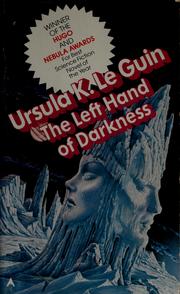
The Left Hand of Darkness
Ursula K. Le Guin
An envoy from a galactic federation trying to talk an entire planet into joining it. Diplomacy, patience and misunderstanding do all the work here.
- Problems solved by talking
- Ideas doing the work, not action
- The galaxy seen from above
- Intimate rather than epic
 Worth a look — with a warning
Neuromancer
William Gibson
Here because it did for the near future what Foundation did for the far one: invented the vocabulary everyone else borrowed. The resemblance stops there.
- Ideas doing the work, not action
- Traders and bureaucrats as heroes
- The galaxy seen from above
- Style prized over clarity
 Best for the long game
The Three-Body Problem
Cixin Liu
A civilisation making plans that outlive everybody alive to make them, with physics standing in for psychohistory. Liu thinks in the same enormous units of time.
- A science that predicts history
- Ideas doing the work, not action
- An empire taking centuries to fall
- Flat characters, functional prose
What should you read after Foundation?
Foundation by Isaac Asimov works on several levels at once, and which book you should read next depends on which of those levels got you. For most readers the closest match is Dune by Frank Herbert — the other pillar: an empire in decline, a prophecy engineered on purpose, and centuries of consequence. Herbert supplies the desert grain that Asimov's overview deliberately skips.
If what stayed with you was problems solved by talking, read Ender's Game by Orson Scott Card instead: if the appeal was a clever mind out-thinking a crisis in a room, Card gives you the purest form of it: every problem solved by reasoning under pressure. Hyperion by Dan Simmons is the other strong option — a galaxy-spanning civilisation seen through seven separate lives, each told in a different voice. Where Asimov zooms out, Simmons stacks close-ups until the same picture appears.
Common questions
- What should you read after Foundation?
- Dune by Frank Herbert, Ender's Game by Orson Scott Card, Hyperion by Dan Simmons are the closest matches. Which fits best depends on what you loved about Foundation: a science that predicts history, an empire taking centuries to fall, problems solved by talking, a new generation every chapter.
- What is the best book like Foundation?
- Dune by Frank Herbert is the strongest overall match. The other pillar: an empire in decline, a prophecy engineered on purpose, and centuries of consequence. Herbert supplies the desert grain that Asimov's overview deliberately skips.
- What are books similar to Foundation by Isaac Asimov?
- Dune by Frank Herbert, Ender's Game by Orson Scott Card, Hyperion by Dan Simmons, 1984 by George Orwell, Brave New World by Aldous Huxley, The Forever War by Joe Haldeman, The Dispossessed by Ursula K. Le Guin, Snow Crash by Neal Stephenson, Foundation and Empire by Isaac Asimov, Red Mars by Kim Stanley Robinson, The Left Hand of Darkness by Ursula K. Le Guin, Neuromancer by William Gibson, The Three-Body Problem by Cixin Liu. Each one matches a different part of Foundation rather than just its genre.
- Is Dune worth reading after Foundation?
- Yes — readers who loved Foundation tend to land well with it: empire in slow collapse; religion designed as a tool; politics over gunfights. One thing to know going in: immersive rather than schematic.
Loved something else?
Start from any book and we’ll build the list around your reasons.
Find my next book →NextBook is a participant in the Amazon Associates Program. We earn from qualifying purchases, at no extra cost to you. It doesn’t affect which books we recommend or how we rank them.
More “what to read next” lists
- Books like 1984
- Books like 2312
- Books like A Clockwork Orange
- Books like A Darker Shade of Magic
- Books like A Gentleman in Moscow
- Books like A Little Life
- Books like A Man Called Ove
- Books like A Memory Called Empire
- Books like A Wrinkle in Time
- Books like All Systems Red
- Books like All the Bright Places
- Books like Altered Carbon