
Books like I Am Legend
What should you read after Richard Matheson’s novel? It depends on what you loved most about it.
- Richard Matheson
- 1954
- Post-apocalyptic horror
What did you love about it?
Choosing one reorders everything below.
Best books to read after I Am Legend
Ranked overall. Pick what you loved above to re-rank them.
 Best overall match
The Stand
Stephen King
King's plague empties America the way Matheson's empties Los Angeles, and the first two hundred pages of survival logistics are the best thing in the book.
- A plague explained
- The last man alive
- Loneliness as the real horror
- 1,150 pages, good-versus-evil finish
 Great match
The Passage
Justin Cronin
Vampirism engineered in a laboratory and then loosed on a continent — Matheson's premise given a hundred years and an enormous cast to work through.
- Science applied to monsters
- A plague explained
- Fortifying a suburban house
- Trilogy, 700 pages each
 Best for the loneliness
The Road
Cormac McCarthy
Strip out the monsters and the science and this is what remains: one man, a dwindling world, and the daily arithmetic of staying alive one more day.
- Loneliness as the real horror
- Short and relentless
- The last man alive
- No explanation, ever
 Great match
Station Eleven
Emily St. John Mandel
A gentler answer to the same question — what a person does with the years after everyone dies — with Matheson's flu made plausible and the horror traded for elegy.
- A plague explained
- Loneliness as the real horror
- Almost no violence or dread
 Worth a look — with a warning
The Maze Runner
James Dashner
Shares the shape of a survivor deducing the rules of a hostile world by experiment, though Dashner's reader is fourteen and the prose knows it.
- Fortifying a suburban house
- Science applied to monsters
- YA, thin characterisation
 Great match
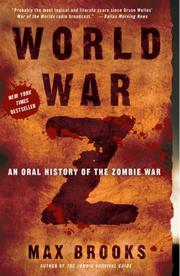
World War Z
Max Brooks
Brooks takes the epidemiology as seriously as Matheson does, then interviews a hundred survivors about exactly how the species nearly lost.
- A plague explained
- Science applied to monsters
- Fortifying a suburban house
- Oral-history format, no protagonist
 Great match
Oryx and Crake
Margaret Atwood
Another last man narrating his own obsolescence, working out how the world ended and what the successor species is likely to make of him.
- The last man alive
- Who the monster really is
- A plague explained
- Satirical corporate-dystopia setup
 Worth a look — with a warning
The Handmaid’s Tale
Margaret Atwood
Here for the isolation rather than the apocalypse: a narrator alone inside a rewritten world, keeping an account for somebody who may never read it.
- Loneliness as the real horror
- Who the monster really is
- No monsters and no plague
 Great match
The Dog Stars
Peter Heller
A man, a plane and a dog, nine years after the flu — the domestic rhythm of survival Matheson invented, written this time with real tenderness.
- A dog you shouldn't get attached to
- Fortifying a suburban house
- Loneliness as the real horror
- Clipped, fragmentary prose
 Best for the twist about the monsters
The Girl with All the Gifts
M.R. Carey
Carey lands Matheson's final move — that the new people are people, and you are the leftover — and does it with a fungal biology that genuinely holds up.
- Who the monster really is
- Science applied to monsters
- A plague explained
- Road-trip structure, ensemble cast
 Worth a look — with a warning
Never Let Me Go
Kazuo Ishiguro
For readers who took the ending as a question about who counts as human. Ishiguro asks it very quietly, with no monsters and no way out.
- Who the monster really is
- Loneliness as the real horror
- No apocalypse, no action
 Great match
The Postman
David Brin
One survivor crossing an emptied America and discovering that what people need most is a story to organise around. Brin's answer to Neville's despair.
- The last man alive
- Loneliness as the real horror
- Optimistic, almost civic
 Best for the short bleak version
Zone One
Colson Whitehead
Three days of a sweeper clearing Manhattan block by block, far more interested in the tedium and grief of the aftermath than in the biting.
- Short and relentless
- Loneliness as the real horror
- Fortifying a suburban house
- Deliberately anticlimactic ending
What should you read after I Am Legend?
I Am Legend by Richard Matheson works on several levels at once, and which book you should read next depends on which of those levels got you. For most readers the closest match is The Stand by Stephen King — king's plague empties America the way Matheson's empties Los Angeles, and the first two hundred pages of survival logistics are the best thing in the book.
If what stayed with you was science applied to monsters, read The Passage by Justin Cronin instead: vampirism engineered in a laboratory and then loosed on a continent — Matheson's premise given a hundred years and an enormous cast to work through. The Road by Cormac McCarthy is the other strong option — strip out the monsters and the science and this is what remains: one man, a dwindling world, and the daily arithmetic of staying alive one more day.
Common questions
- What should you read after I Am Legend?
- The Stand by Stephen King, The Passage by Justin Cronin, The Road by Cormac McCarthy are the closest matches. Which fits best depends on what you loved about I Am Legend: the last man alive, science applied to monsters, fortifying a suburban house, loneliness as the real horror.
- What is the best book like I Am Legend?
- The Stand by Stephen King is the strongest overall match. King's plague empties America the way Matheson's empties Los Angeles, and the first two hundred pages of survival logistics are the best thing in the book.
- What are books similar to I Am Legend by Richard Matheson?
- The Stand by Stephen King, The Passage by Justin Cronin, The Road by Cormac McCarthy, Station Eleven by Emily St. John Mandel, The Maze Runner by James Dashner, World War Z by Max Brooks, Oryx and Crake by Margaret Atwood, The Handmaid’s Tale by Margaret Atwood, The Dog Stars by Peter Heller, The Girl with All the Gifts by M.R. Carey, Never Let Me Go by Kazuo Ishiguro, The Postman by David Brin, Zone One by Colson Whitehead. Each one matches a different part of I Am Legend rather than just its genre.
- Is The Stand worth reading after I Am Legend?
- Yes — readers who loved I Am Legend tend to land well with it: a plague depopulating a country; survival practicalities in detail; isolation before community. One thing to know going in: 1,150 pages, good-versus-evil finish.
Loved something else?
Start from any book and we’ll build the list around your reasons.
Find my next book →NextBook is a participant in the Amazon Associates Program. We earn from qualifying purchases, at no extra cost to you. It doesn’t affect which books we recommend or how we rank them.
More “what to read next” lists
- Books like 1984
- Books like 2312
- Books like A Clockwork Orange
- Books like A Darker Shade of Magic
- Books like A Gentleman in Moscow
- Books like A Little Life
- Books like A Man Called Ove
- Books like A Memory Called Empire
- Books like A Wrinkle in Time
- Books like All Systems Red
- Books like All the Bright Places
- Books like Altered Carbon